In Sea Girt, You're Not Bidding on the House. You're Bidding on the Lot.
September 10, 2026
September 10, 2026
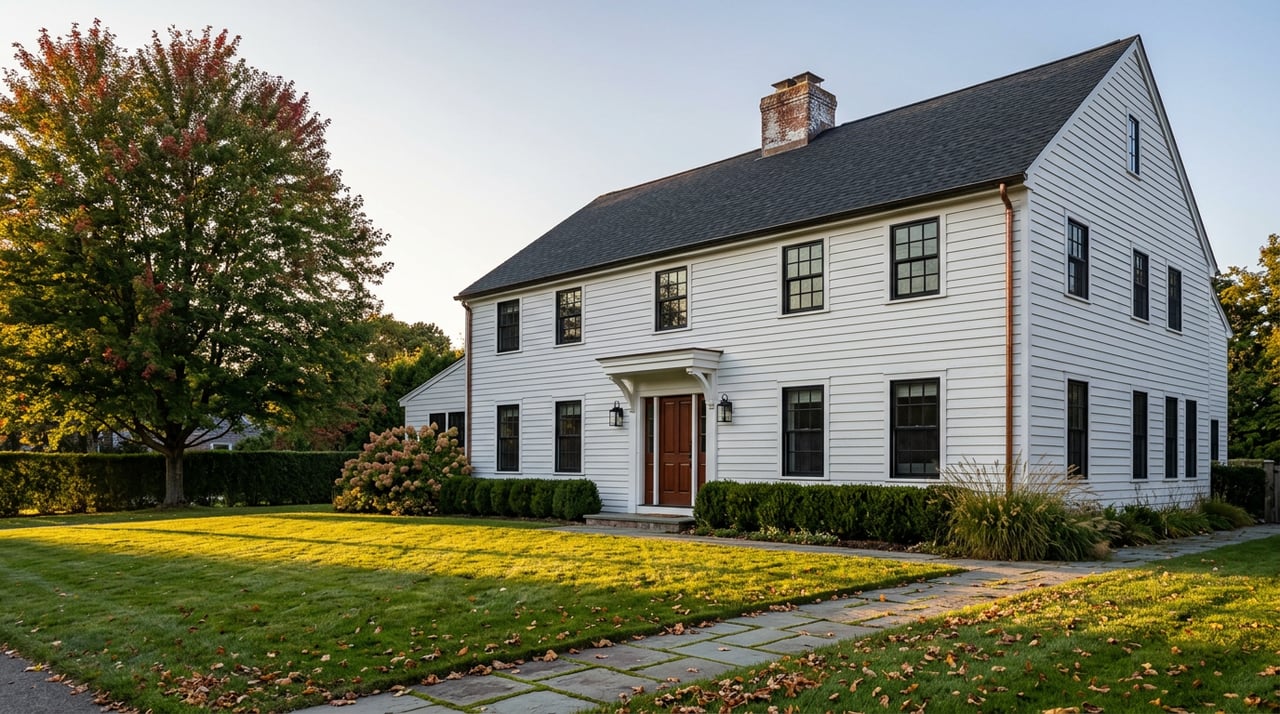
A 1960s ranch goes on the market in Sea Girt for $2.1 million. On paper it looks stretched, a modest three-bedroom on a small footprint asking a price that would buy a genuine estate a few towns inland. Then it closes at $2.6 million, all cash, to a buyer who already has an architect on retainer. Nobody overpaid. The house was never really for sale. The dirt underneath it was.
That is the pattern worth understanding before you compare Sea Girt to any other Shore town on price alone. The number on the listing sheet describes a structure. The number that actually explains the market describes a parcel, because Sea Girt has run out of them.
This isn't a market observation. It's a legal finding. Under New Jersey's Mount Laurel framework, every municipality has to calculate a "Realistic Development Potential," or RDP, the amount of vacant, developable land it has left to satisfy its constitutional affordable housing obligation. Back in 2023, the global settlement agreement between Sea Girt and the Fair Share Housing Center set Sea Girt's RDP at five units. That was already a tiny number for a borough carrying a prior-round obligation.
Then the state rewrote the math. Under the amended Fair Housing Act calculations issued for the 2025 to 2035 fourth round, Sea Girt's obligation jumped to 73 units, filed under Superior Court docket MON-L-000337-25. But the borough's vacant land didn't grow to match it. Sea Girt's own filings put its current Realistic Development Potential at zero. An ordinance adopted by the Borough Council in March 2026 codifies that reality into the town's development fee structure.
Zero developable vacant land is a different kind of scarcity than "low inventory." Low inventory is a market condition that can loosen.
Older coastal homes, many built between the 1940s and the 1980s, get purchased for what the lot alone is worth, typically in the $2 million to $3.5 million range, then demolished. What replaces them runs 4,000 to 6,000 square feet or more, and lands in the $4 million to $7 million range depending on how close the lot sits to the ocean.
Construction cost estimates for the borough vary depending on finish level and who's doing the estimating. One parcel-level cost analysis puts mid-range single-family construction in Sea Girt at $288 to $384 per square foot, with luxury custom work running $720 or more per square foot, and land representing anywhere from 15 to 60 percent of total project cost on a teardown or infill lot. Other estimates for the borough's high end put all-in construction closer to $400 to $650 per square foot once site work, elevation requirements, and premium finishes are included. The range is wide because Sea Girt doesn't really have a "typical" build. It has a luxury build and a smaller number of mid-range renovations, and very little in between.
| What you're really paying for | Approximate range |
|---|---|
| Teardown-candidate lot value | $2M to $3.5M |
| New construction, hard costs | $288 to $650+ per sq ft |
| Finished new build, 4,000 to 6,000+ sq ft | $4M to $7M+ |
Ask what a Sea Girt address costs and you'll get a listing price. Ask what it costs to build one from the ground up and you'll understand why that price holds even in a soft cycle.
If you've compared Sea Girt across a few different home-value estimators this year, you've probably noticed the numbers don't agree with each other, sometimes by more than a million dollars for overlapping months. Monthly medians reported across different platforms in 2026 have ranged from roughly $2 million to nearly $4 million. That's not a data error. It's what happens in a market with genuinely low transaction volume, where a handful of closings define the entire month's statistic. A single sale above $6 million, which isn't rare given the teardown-to-luxury pipeline described above, can shift the borough's reported median on its own.
The practical takeaway is that a Sea Girt median price isn't a reliable benchmark the way it might be in a town with hundreds of annual transactions. What's more stable, and more useful for planning a budget, is the land-value-plus-construction-cost math above. That number moves with material costs and lot scarcity, not with which three houses happened to close last month.
If you're comparing Sea Girt to another Shore town, the first question isn't "what does the median buy here." It's "am I buying a house, or am I buying a lot I'll need to build on." Those are different budgets with different timelines, and conflating them is where buyers get outbid without understanding why.
A turnkey buyer, someone who wants a livable, move-in-ready home without a construction phase, is shopping a genuinely thin slice of Sea Girt's inventory, and should expect to compete against buyers who are willing to pay a premium specifically because the house doesn't need to come down. A teardown buyer needs to underwrite land cost and construction cost as one number from the start, not sequentially, because the two are priced together by every other bidder at the table.
There's also a permitting detail worth knowing before you're deep into a purchase agreement. Sea Girt's Building and Construction Department is physically housed in neighboring Spring Lake as part of a regional construction office arrangement, so permit applications, inspections, and fee schedules for a Sea Girt project route through that shared office. Sea Girt's Zoning and Code Enforcement office says zoning permits are required not just for new construction but for pool installation, added habitable floor area, and any change to impervious surface like a driveway or patio. None of this is unusual for a small Shore borough, but it's one more reason to loop in someone who works this specific market before you assume a renovation timeline.
Why do construction cost estimates for Sea Girt vary so much? Because the borough's building activity spans a wide range, from mid-range renovations to fully custom luxury rebuilds, and site conditions like FEMA elevation requirements add cost that a flat per-square-foot number doesn't capture well.
The pattern described here applies specifically to older coastal properties acquired primarily for their land value, which is common but not universal.
Sea Girt rewards buyers who understand what they're actually competing for. If you're weighing this market against another Shore town and want a clear read on what a specific address or lot is really worth to build on, South Jersey Fine Homes can walk through the math with you before you write an offer.
This article is general information, not legal, tax or financial advice. Consult a qualified professional about your situation.
Stay up to date on the latest real estate trends.